Desigining Non-Binary Maps to Reimagine Borderlands
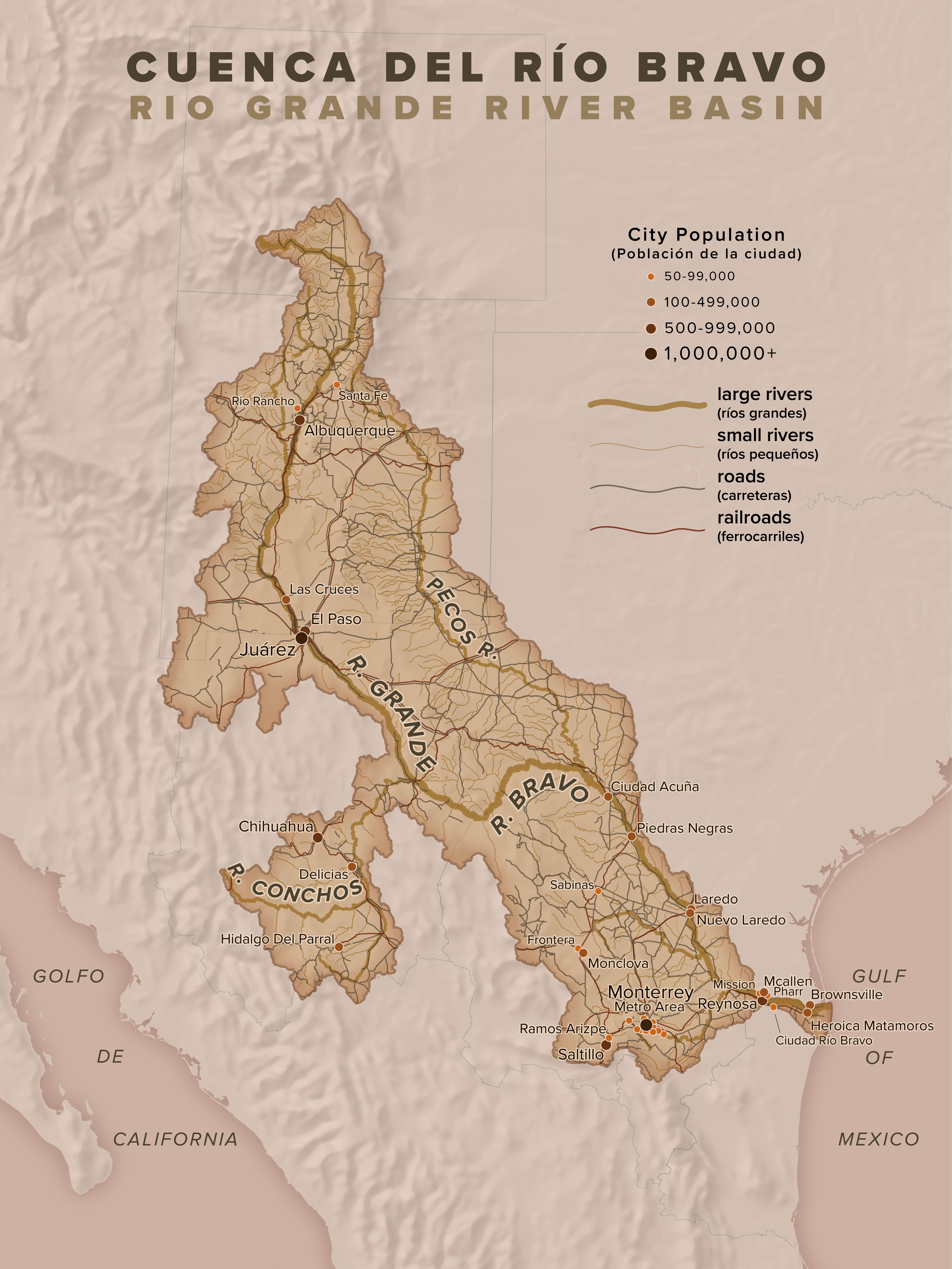
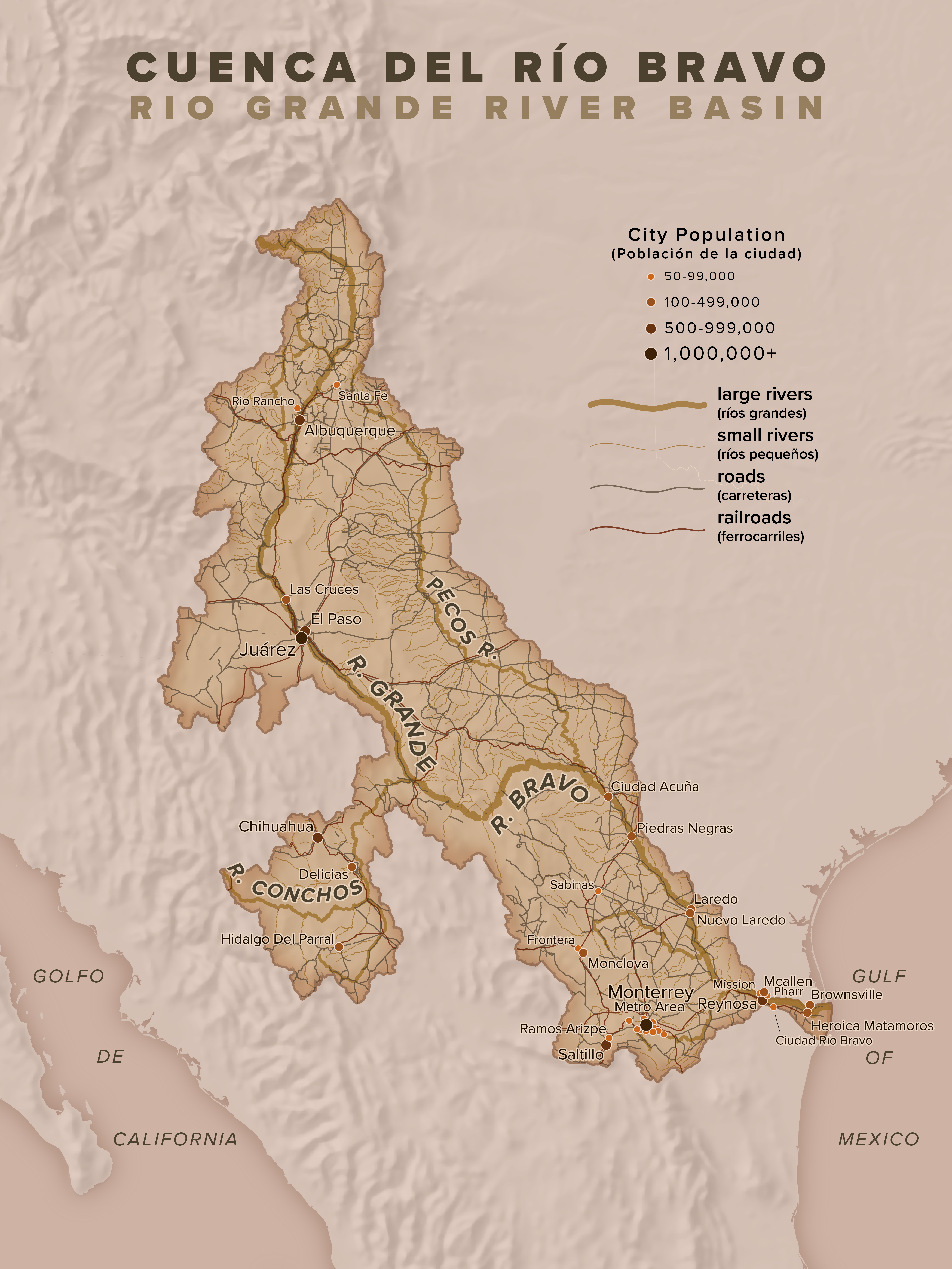
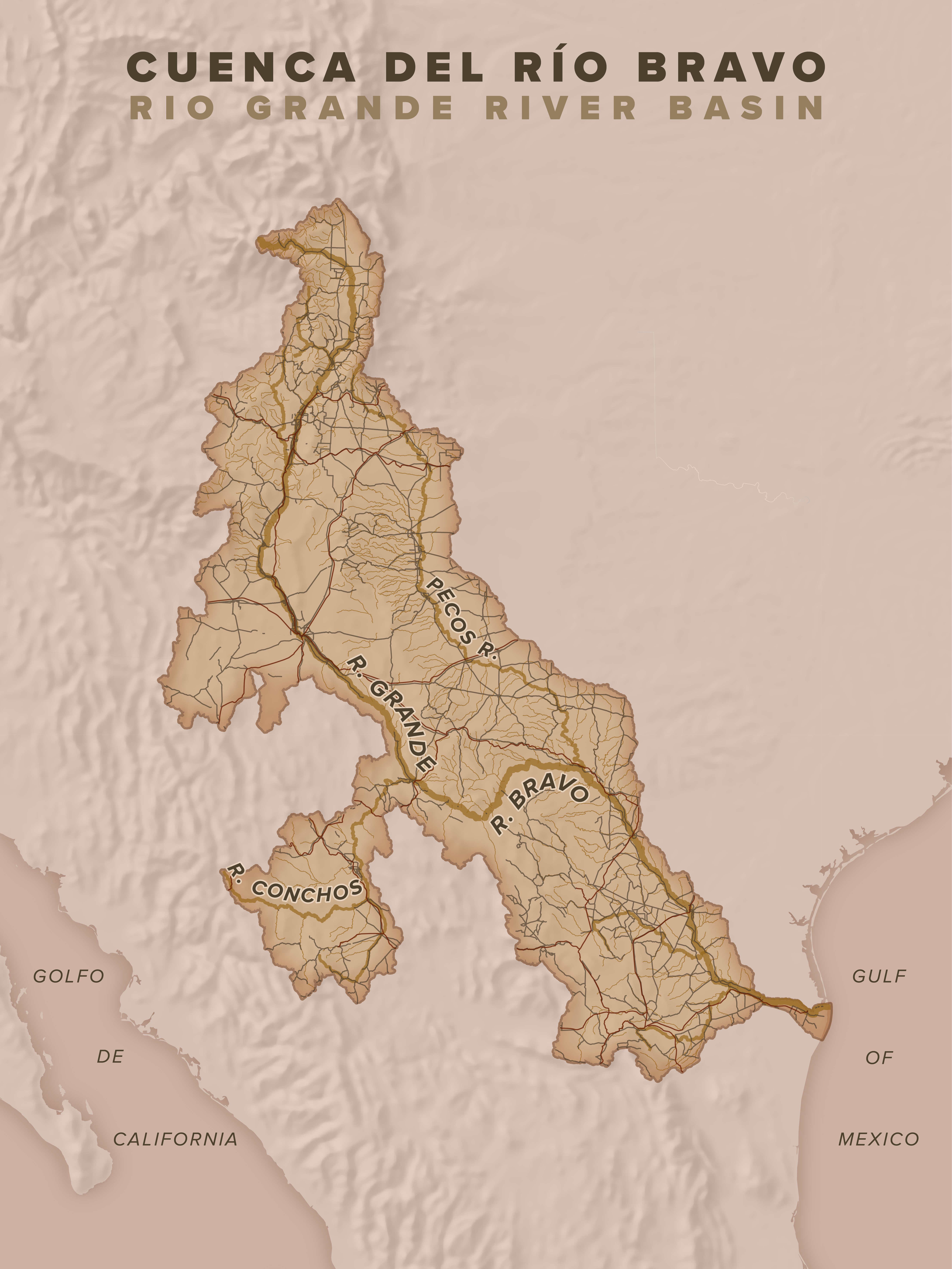
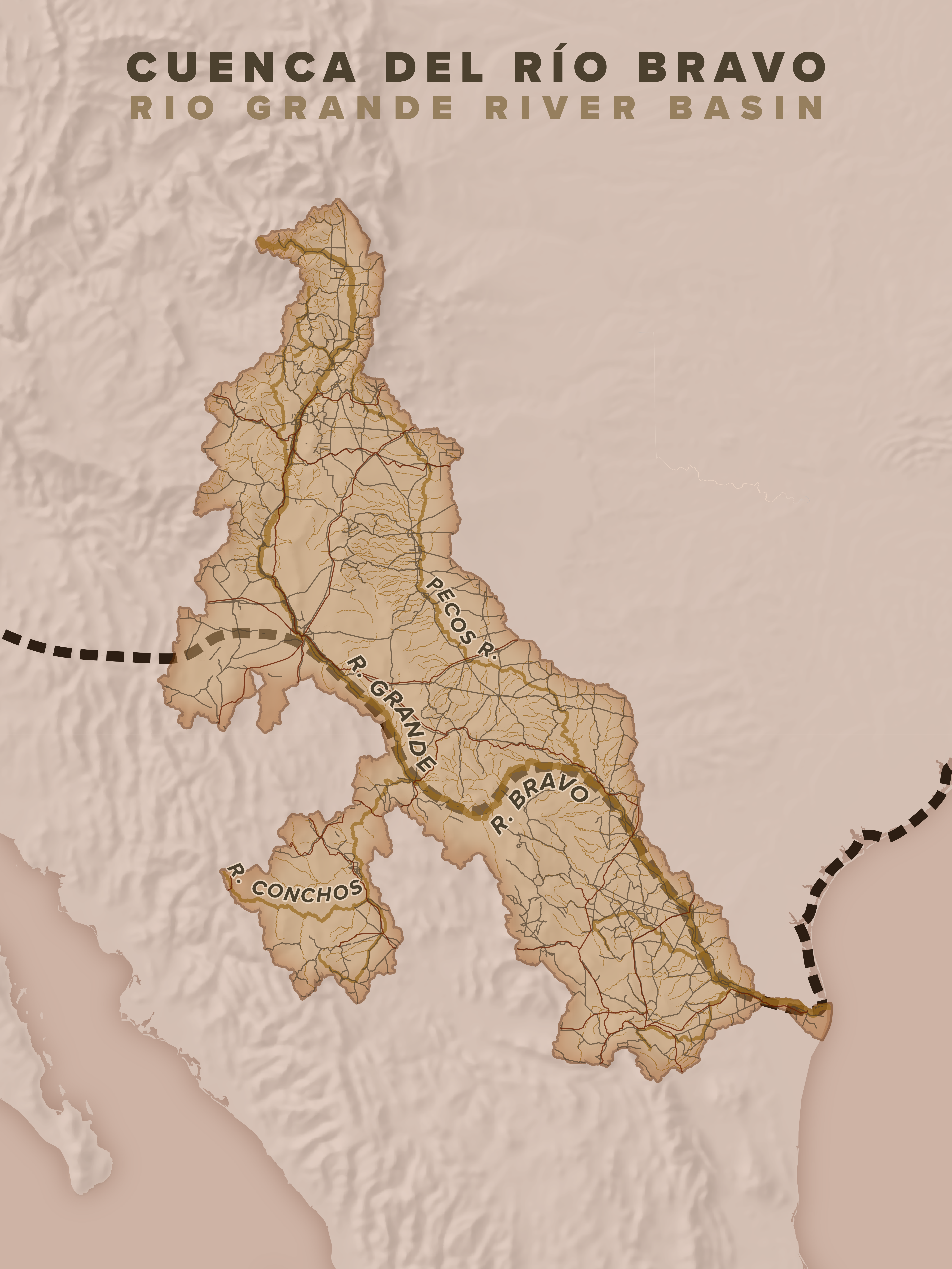
In collaboration with Melissa W. Wright, I am developing maps of the Rio Grande River Valley region (which overlaps with the borderlands between Mexico and the U.S.) that represent the area as fluid and one that defies state borders. In doing so, we call these maps non-binary maps. The primary purpose of these maps is to highlight the complexity of this region, and demonstrate that there is no one obvious spot to draw a border. In particular, we draw on Muñoz’s idea of the Brown Commons, which embraces multitudes, community, and persistence through difficult challenges. Additionally, it also recognizes the experiences of brown people and the way these lives are policed by state, authorities, and borders. We also use this idea to reflect the literal brownness that most bodies of water exist as. While most maps portray all water in perfect blues, in reality many bodies of water run through silt and soil which turns them brown. These maps were originally made to assist Melissa in teaching and lecturing about the region in a way that matched her world view, given that many other historical and modern maps reinforce borders. Now, given the productive results of this collaboration, we are writing two articles to describe the map development and theoretical insights behind this project. I have presented this research at AAG 2025 and NACIS 2025.
The first map you see here is the fully complex brown map, featuring complex networks of cities, roads, railroads, and rivers. Below, we iterate on these maps. In the first brown map, we had kept state borders for context, but in the second we remove them. In the third brown map, we remove cities, most labels, and the legends, drawing focus to the complex networks. In the final brown map, we add in the Mexico-U.S. border, acknowledging its impact on the daily life of people and other life in this region. The border is thick and dark, representing its looming presence. However, it is also dashed, suggesting that it does not have to be permanent.